

Giving Students the Tools to Tell Their Stories
What happens when students are given the tools to tell the stories of their own communities?
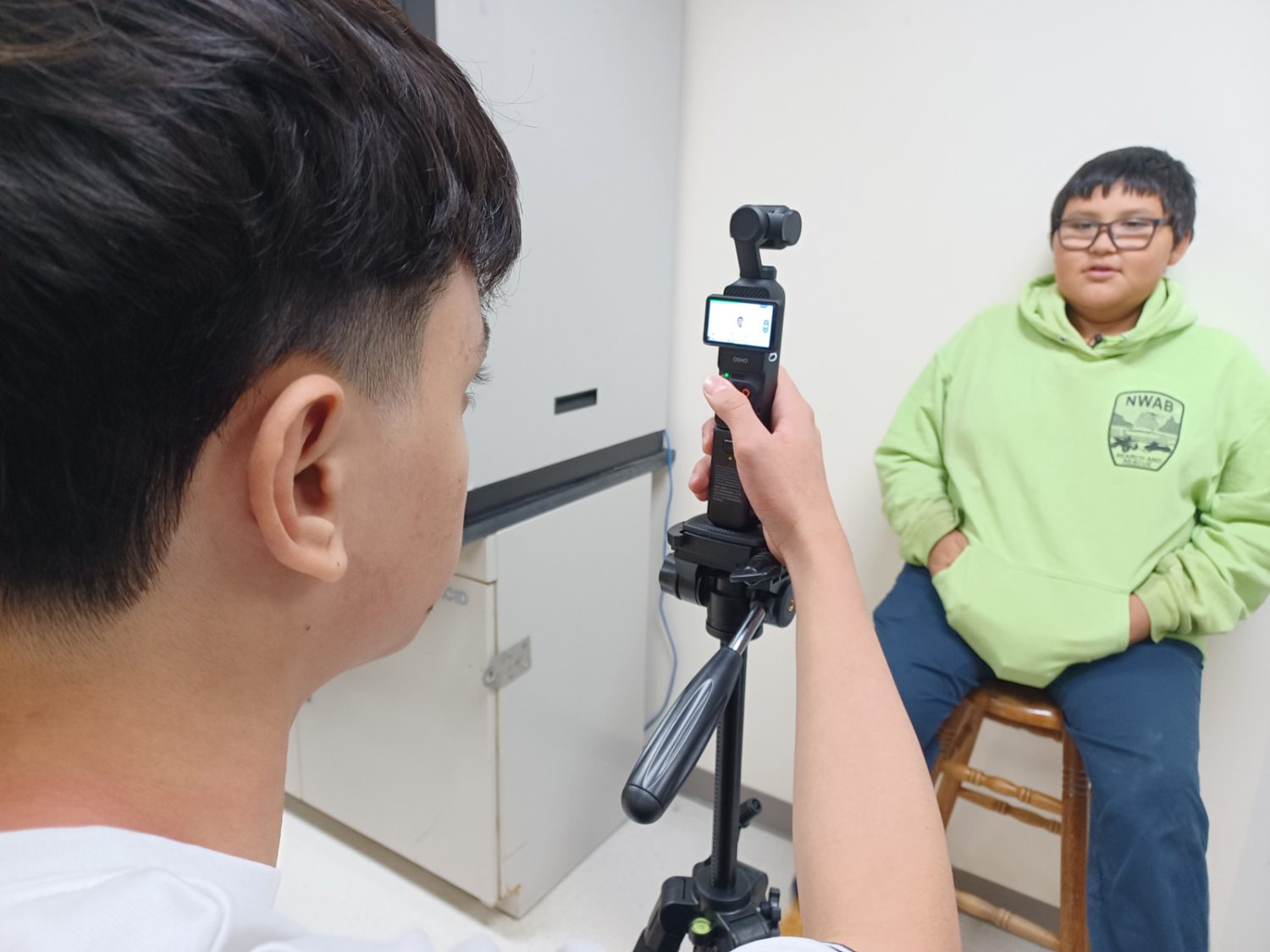
During a recent T3 Alaska project trip to Kotzebue, students learned how to use cameras, conduct interviews, capture effective video, and think about the responsibilities that come with documenting people and places.
The goal was more than learning how to operate a camera. Communication through storytelling is an important part of T3 Alaska’s work with the Alaska Department of Transportation and Public Facilities (DOT&PF). Students are learning how video can be used to communicate community needs, document projects, and share local knowledge with audiences beyond their communities.
Students practiced with gimbal cameras, staged interviews, captured different types of shots, and learned about intellectual property and user consent. The hands-on approach gave them a chance to experiment while developing skills they can use in many different situations.
And they already have plenty of stories to tell.
In Kotzebue, students are working with their T3 coach and community partners on energy efficiency and weatherization. They will be able to use their new storytelling skills to document that work, share what they learn, and create resources that can benefit other students and communities across Alaska.
To support that work, the Kotzebue T3 Club, along with other T3 Alaska clubs, received a video storytelling kit. The goal is to make storytelling something students can continue doing long after a T3 project or staff visit is over.
Whether documenting a community project, highlighting local knowledge, or sharing what happens when a storm affects their community, students have stories worth telling. T3 Alaska is helping give them the skills and tools to tell those stories themselves.