

Engaging Students in Energy Storytelling
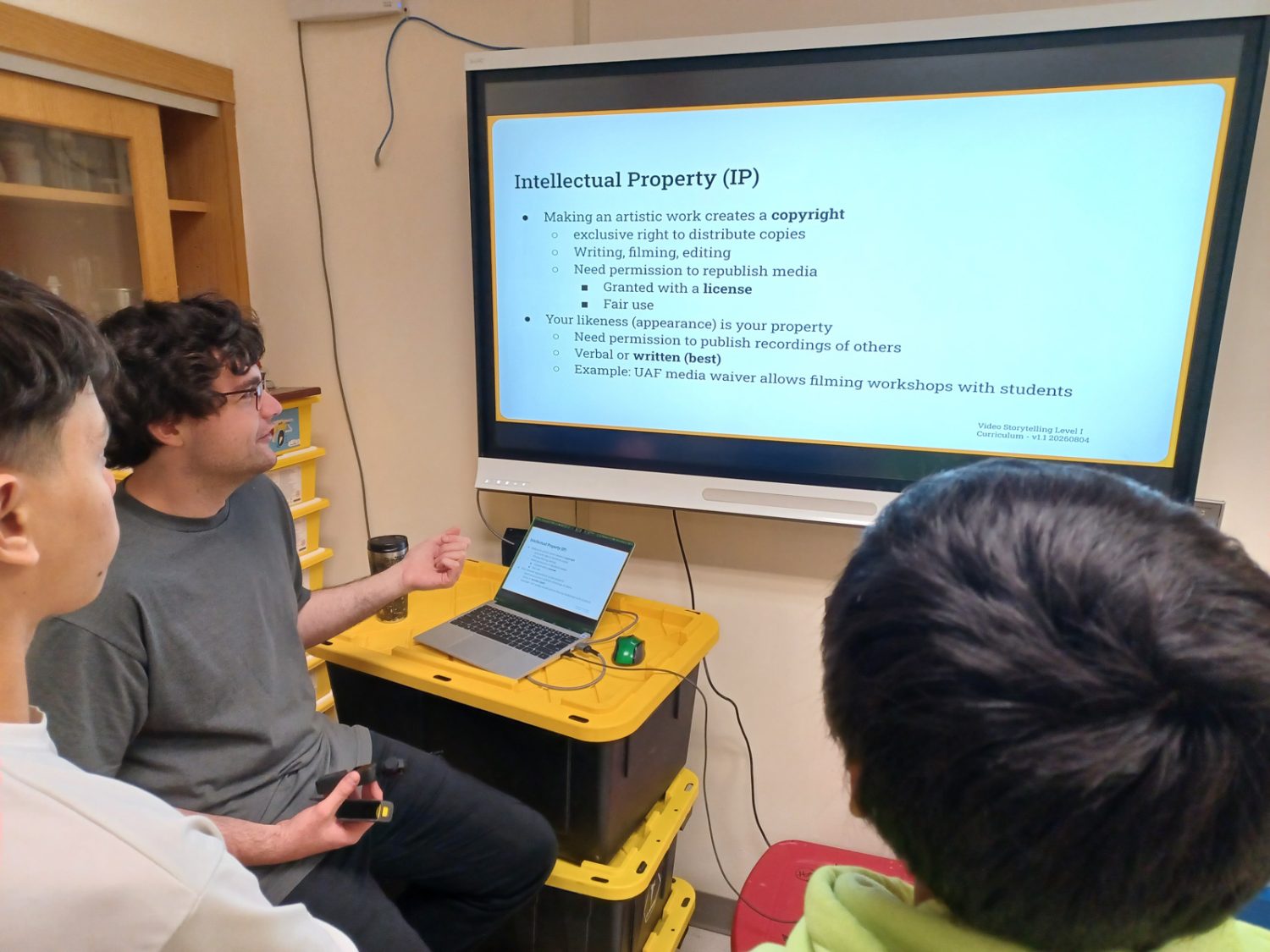
George Reising and Adrian Burke recently traveled to Kotzebue to work with students and coaches at Kotzebue High School’s T3 Club, combining energy education with hands-on storytelling.
 For remote Alaska communities, energy costs are a significant challenge. Residents have limited control over factors such as fuel and shipping costs, but they can make choices about how much energy their homes and schools use. Helping students understand energy efficiency gives them knowledge they can apply in their own communities.
When people think about STEM education, they often picture programming, design challenges, and formulas. In Kotzebue, students are expanding that picture to include infrared cameras, window film, weatherization tools, and video equipment—tools that can help them understand energy efficiency and communicate what they learn.
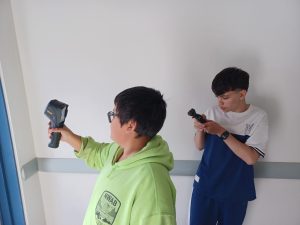 “This is so cool!” said Jason Stein, a ninth-grade T3 student at Kotzebue High School, while learning to use a gimbal camera. “This gimbal tracks so well, and you can have it follow your subject.”
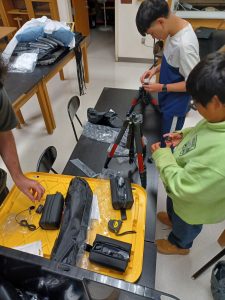
Students practiced using cameras, conducting interviews, staging shots, and understanding intellectual property and user consent. Through hands-on activities, they learned how different types of shots and techniques can be used to tell a story.
These skills can be applied well beyond the classroom. Students can document community projects, capture important events, or share resources and solutions with others. In this case, students will use their storytelling skills to document their energy-efficiency work and share what they learn with other students around Alaska.
The work will continue throughout the school year. Students will work with their T3 coach, Merle Green, to deepen their understanding of energy efficiency and weatherization and work toward an Energy Efficiency and Weatherization badge. Through a collaboration with the Renewable Energy Alaska Project (REAP), students will also have opportunities to make basic weatherization improvements in community homes and document what they learn along the way.
By connecting energy education with hands-on projects and communication skills, students are learning not only how energy affects their communities, but also how they can help identify solutions and share what they learn with others.
This initiative brings together funding and support from the Office of Naval Research’s ARCTIC Program, the National Science Foundation’s Navigating the New Arctic Diesel-Free Program, and workforce initiatives sponsored by the Alaska Department of Transportation and Public Facilities.